
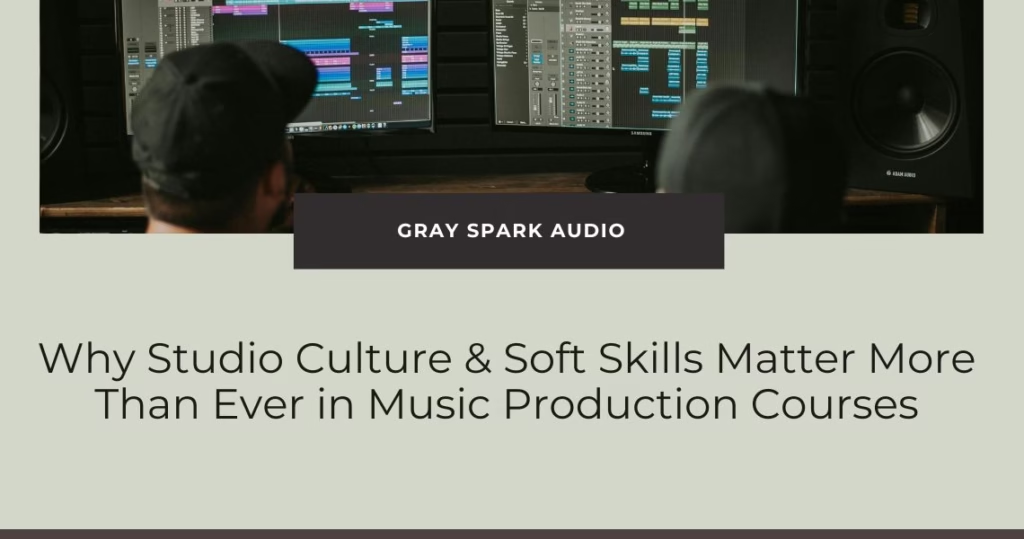
When students join a music production course, they usually expect to dive into plugins, DAWs, microphones, and mixing techniques. But what many don’t realize is this:
The real engine behind successful music production isn’t just technical skill — it’s studio culture and soft skills.
In today’s fast-evolving industry, where AI tools are growing and home studios are more powerful than ever, the biggest advantage a student can have is the ability to collaborate, communicate, and create a positive environment in any studio setting.
At Gray Spark Audio Academy, this belief is central to how we shape every aspiring producer and engineer.
1. Music Production Is About People, Not Just Tools
You can master every feature in Ableton or Pro Tools, understand signal flow deeply, and know exactly how to treat every frequency —
but if you can’t:
communicate with artists,
collaborate in a team,
handle pressure and deadlines,
create a safe and inspiring vibe,
then you’ll struggle in the real world of music production.
Artists don’t only look for a competent engineer;
they look for someone they feel comfortable creating with.
This is why studio culture becomes a defining factor in whether a session succeeds or falls apart.
2. Why Soft Skills Matter More Than Ever in Music Production
As AI and modern tools automate parts of recording, mixing, and editing, the true value of a music producer now lies inhuman skills.
Here are the soft skills every music production student must develop:
• Communication
The way you guide an artist through a performance can change the outcome of a recording.
• Session Management
Good music production includes time management, planning, and keeping the session flowing smoothly.
• Emotional Intelligence
Artists can be vulnerable or nervous — a producer’s calm presence can shift the entire energy of a session.
• Problem Solving
Creative, technical, and interpersonal problems appear daily in a studio.
Great producers solve them quietly and quickly.
• Adaptability
No two sessions, artists, or genres are the same — flexibility is a major part of modern music production.
These skills can’t be learned from a plugin tutorial.
They come from real interaction, practice, and mentorship.

At Gray Spark Audio Academy, our goal is not just to teach tools — it’s to prepare students for real, professional music production careers.
Here’s how we integrate soft skills and studio culture:
• Live Sessions With Real Artists
Students learn how real music production works, not just theoretical steps.
• Team-Based Projects
Working together builds communication, leadership, and creative collaboration.
• Industry Mentorship
Our engineers and producers teach the unspoken rules of studio behavior — the things that truly shape a career.
• Professional Etiquette Training
From punctuality to file management to how to handle client feedback, students learn the habits of successful producers.
3. How Gray Spark Audio Academy Builds Studio Culture Into Music Production Training
In music production, the most successful professionals are often those who:
maintain positive energy,
understand the artist’s vision,
stay organized,
guide the session with confidence,
build long-term relationships.
These qualities often matter more than having the best plugin chain.
A great studio culture creates:
smoother sessions
better performances
higher-quality recordings
happier clients
repeat work
In a competitive industry, these small advantages become career-defining.
4. How Strong Studio Culture Shapes Your Music Production Career
Conclusion: Soft Skills Are Now Essential in Music Production
As the music world continues to change, one thing is clear:
Technical skills get you started…
but studio culture and soft skills take you forward.
Modern music production requires more than knowing your DAW —
it requires emotional intelligence, communication, collaboration, and the ability to create an inspiring space where artists can be their best.
At Gray Spark Audio Academy, we teach music production as both a technical craft and a human-centered profession — because that’s what the industry now demands.