
SOUND ENGINEERING
What Is Signal Flow and Why Does Every Audio Engineer Need to Understand It?
You press record, but nothing is being recorded. Is the microphone faulty? Is the interface not working? Is the DAW set up incorrectly
By Ronak Runwal · August 31, 2026 · 6 min read
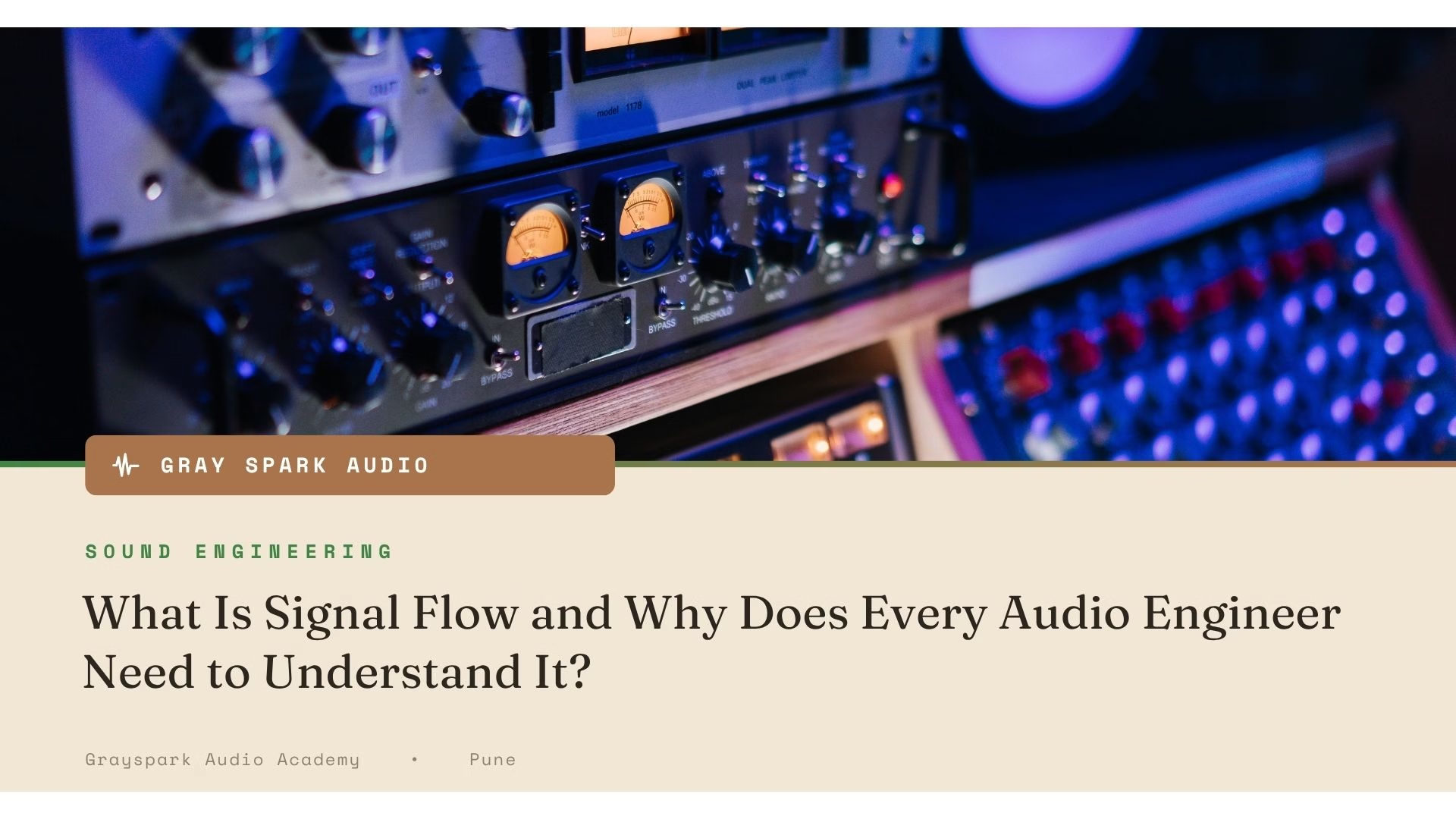
Before changing anything, an audio engineer checks one fundamental thing: signal flow.
Understanding signal flow in audio engineering helps you know exactly where an audio signal comes from, where it goes, and where a problem might be occurring. It is one of the most important foundations of sound engineering.
What Is Signal Flow in Audio Engineering?
Signal flow is the path an audio signal follows from its source to its final destination.
In a typical recording setup, the signal might travel like this:
The workflow
Sound Source → Microphone → Preamp/Audio Interface → DAW → Processing → Monitors
Every stage has a purpose. If you understand this path, you can quickly identify where a signal is being lost, weakened, distorted, or routed incorrectly.
This is why understanding audio signal flow is one of the first skills an aspiring audio engineer should develop.
Why Is Signal Flow Important in Audio?
Good audio engineering isn’t only about knowing microphones, plugins, or expensive equipment. It is also about understanding how everything connects.
Signal flow helps engineers:
- Troubleshoot recording problems
- Set correct input and output levels
- Avoid unwanted noise and distortion
- Route audio correctly
- Understand studio equipment
- Work confidently with complex setups
Whether you’re recording vocals, mixing music, working in a dubbing studio, or handling live sound, signal flow is always part of the job.
What Is an Audio Signal Chain?

An audio signal chain is the sequence of equipment and processes through which an audio signal travels.
For example, a vocal recording might follow:
Vocal → Microphone → Preamp → Audio Interface → DAW → Plugins → Master Output → Monitors
Changing any part of this chain can change the way the signal behaves.
This is also why audio engineers need to understand the difference between an input and an output. The input receives the signal; the output sends it somewhere else.
Once you understand this basic relationship, studio routing becomes much easier to understand.
A problem in signal flow can create some very obvious — and sometimes frustrating — issues.
What Happens When Signal Flow Is Wrong?
You might experience:
- No sound at all
- Very low recording levels
- Clipping or distortion
- Unwanted noise
- Feedback
- Audio reaching the wrong destination
Instead of randomly changing settings, an engineer can follow the signal from beginning to end and find exactly where the problem occurs.
That’s the real power of understanding signal flow in sound engineering: it turns troubleshooting from guesswork into a logical process.
A portfolio session in progress — caption me.
How Do Audio Engineers Troubleshoot Signal Flow?

Professional engineers usually work through the signal chain step by step.
Start at the source and ask:
Is the source producing a signal?
Then check the microphone, cable, preamp, interface input, DAW track, routing, processing, and final output.
If the signal is present at one stage but disappears at the next, you’ve found the area that needs attention.
This simple approach works across recording studios, live sound systems, post-production rooms, and broadcast environments.
Why Studio Experience Matters
Hands-on studio time is what separates theoretical knowledge from professional capability. When you’re choosing a course, make practical studio access a priority — it’s where readiness is really built.
Why Should Every Audio Engineer Learn Signal Flow?
Signal flow is the foundation that connects everything else you learn in audio engineering.
You can learn hundreds of plugins, microphones, mixing techniques, and production tools — but if you don’t understand how audio moves through a system, troubleshooting and routing will always feel confusing.
For students learning sound engineering, signal flow is therefore not just another technical topic. It is a skill that makes every other part of audio production easier to understand.
At Gray Spark Audio Academy, practical understanding is an important part of learning audio. Working with real studio equipment and real signal paths helps students connect technical concepts with what actually happens in a professional studio.
Final Takeaway:
You don’t need to memorize every piece of studio equipment to understand signal flow.
You simply need to learn to ask one question:
“Where is the signal coming from, and where is it going?”
Once you can answer that confidently, you’re already thinking like an audio engineer.
VISIT THE STUDIO
Want to set up a meeting at our facility?
Come see the rooms, meet the faculty, and get a feel for how we train. Our next batch begins June 2027.
Join the newsletter for course updates and open-studio dates.
Keep reading
Career
How to Build a Sound Engineering Portfolio That Gets You Hired
5 min read
Studio
Microphone Placement Basics Every Beginner Should Know
7 min read
Industry
Careers in Audio: Where Sound Engineers Work in 2026
6 min read
Grayspark Audio Academy
PUNE, INDIA
© 2026 Grayspark Audio Academy. All rights reserved.