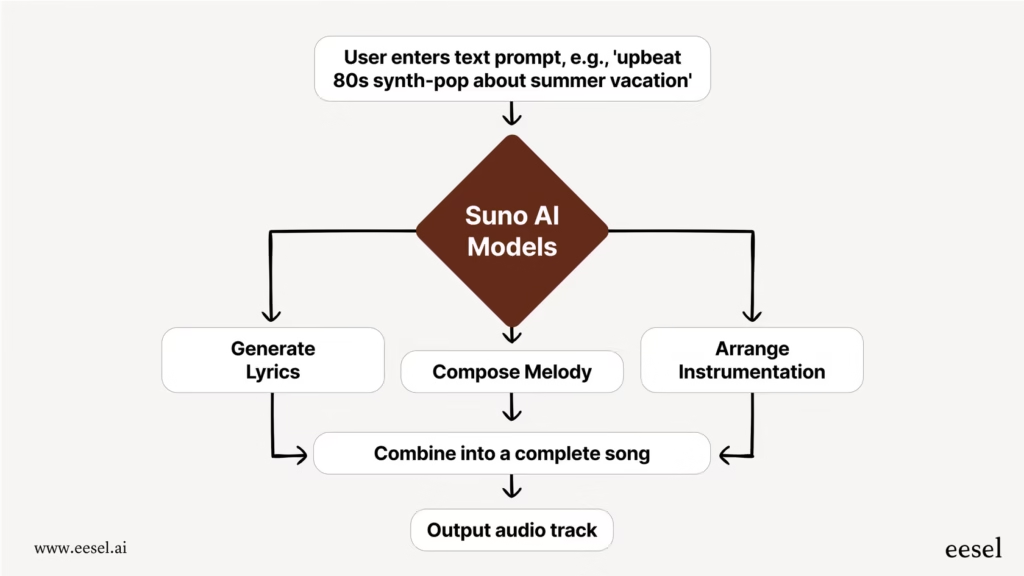
AI tools like Suno have entered the music world fast—and for students learning music production, it can feel both exciting and confusing. On one hand, you can generate a full song in minutes. On the other, you’re left wondering: Where does learning end and shortcuts begin?

At Gray Spark Audio Academy, we believe AI isn’t something to fear or blindly rely on. It’s something to understand, question, and use wisely. Here’s what every production student should actually learn about AI tools like Suno.

The first lesson is mindset. AI tools don’t replace musicians, producers, or engineers—they replace blank-page anxiety.

For students in music production, Suno can help with:

  • idea generation

  • rough demos

  • exploring genres quickly

  • understanding arrangement styles


However, AI doesn’t teach you why a chord progression works or how to fix a weak vocal performance. Those skills still come from learning fundamentals, training your ears, and spending time in real sessions.

AI Is a Tool, Not a Replacement

Prompting Is the New Creative Skill

Using Suno effectively isn’t about clicking a button—it’s about communication. The quality of output depends heavily on how clearly you describe the mood, tempo, genre, and energy.

This connects directly to production skills:

  • defining creative intent

  • referencing styles correctly

  • thinking like a producer, not just a listener

Learning to write better prompts actually trains students to think more clearly about sound and structure.

AI Can Help You Analyze Music Faster

One underrated use of AI tools is analysis. Students can generate multiple versions of a song idea and study:

  • arrangement patterns

  • structure differences

  • genre conventions


For music production learners, this speeds up exposure. Instead of spending weeks breaking down references manually, AI can help you explore variations quickly—as long as you critically listen and question the results.

What AI Can’t Teach You

This part matters most.

AI tools like Suno can’t teach:

  • mic placement

  • room acoustics

  • vocal coaching

  • performance psychology

  • collaboration in a studio


These are core music production skills that only develop through hands-on experience, feedback, and human interaction. Relying too much on AI too early can actually slow real growth.

How Students Should Use Suno the Right Way

The healthiest approach is balance.

Use AI to:

  • spark ideas

  • create demo references

  • explore new genres

But rely on traditional training to:

  • refine sound

  • shape emotion

  • develop a personal style

  • build professional skills

AI should support creativity—not replace the learning process.

Final Thoughts: Learn AI, Don’t Lean on It

AI tools like Suno are here to stay. For today’s students, ignoring them isn’t smart—but depending on them blindly is even worse.


The future of music production belongs to creators who understand technology and respect the craft. Learn the tools, question the output, and keep building skills that no algorithm can replace.