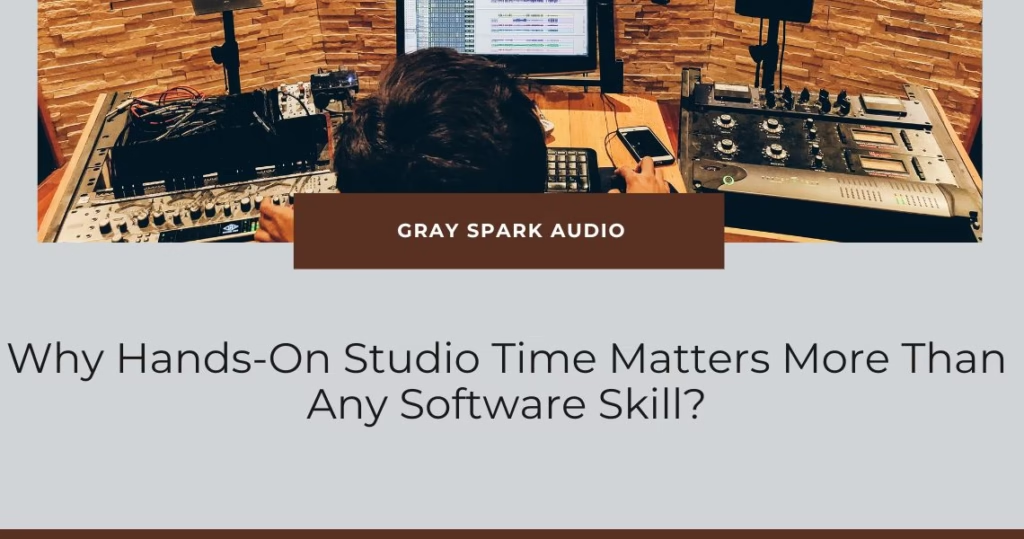
In a world where tutorials are endless and plugins drop every week, it’s easy for students to believe that mastering software is the ultimate key to becoming a great producer. But at Gray Spark Audio Academy, we see the opposite happen every year—students grow the fastest when they stop relying solely on screens and start learning inside a studio environment.

Here’s why real, hands-on time in a studio still beats hours of clicking through a DAW.

1. Music Production Is About Listening, Not Just Editing

Software trains your eyes.
studio trains your ears.

Students often depend on visual cues—waveforms, meters, colors, graphs—but real engineering happens by listening. When you’re in a studio, you learn how small changes in mic placement, room acoustics, and gain staging shape the entire sound. These lessons simply can’t be learned through plugins alone.

2. You Learn How Sound Behaves in the Real World

A DAW gives you a controlled world.
A studio gives you a messy, unpredictable, exciting one.

Hands-on sessions expose students to:

  • Phase issues that don’t show up on YouTube tutorials

  • Room reflections and resonance

  • Real instrument dynamics

  • Communication with artists and musicians


This is where true problem-solving begins—something no preset or VST can teach.

Music production is as much about people as it is about gear.

Inside a studio, students learn:

  • How to guide nervous singers

  • How to understand a band’s creative direction

  • How to translate emotional language into technical decisions

  • How to keep sessions smooth and professional


These soft skills are what turn students into real-world engineers—not just software operators.

3. Working With Artists Builds Skills Software Never Can

When everything is available instantly in software, mistakes don’t cost you much.
But when you’re working on hardware in a studio, every move matters.

You learn:

  • Gain staging with intention

  • Respect for signal flow

  • How analog gear shapes tone

  • How to commit to decisions


This layered understanding forms the foundation of a professional engineer.

4. Hardware Teaches You Discipline and Intent

Conclusion: Software Skills Make You Fast. Studio Skills Make You Good.

Mastering plugins is important—but it’s only half the journey. True confidence, artistry, and professionalism come from time spent in a studio, making decisions with your hands, your ears, and your instincts.


At Gray Spark Audio Academy, we don’t just teach students how to operate DAWs.
We train them to think, feel, collaborate, and create like real engineers.